Loading... Please wait...
- Call us on Phone 213.936.5599
- Gift Certificates
- Wish Lists
- My Account
- 0.00

Categories
Fumio Demura – "Style Does Not Matter"
Posted by Jose M. Fraguas on Dec 3rd 2016
Fumio Demura
"Style Does Not Matter"
Part 2
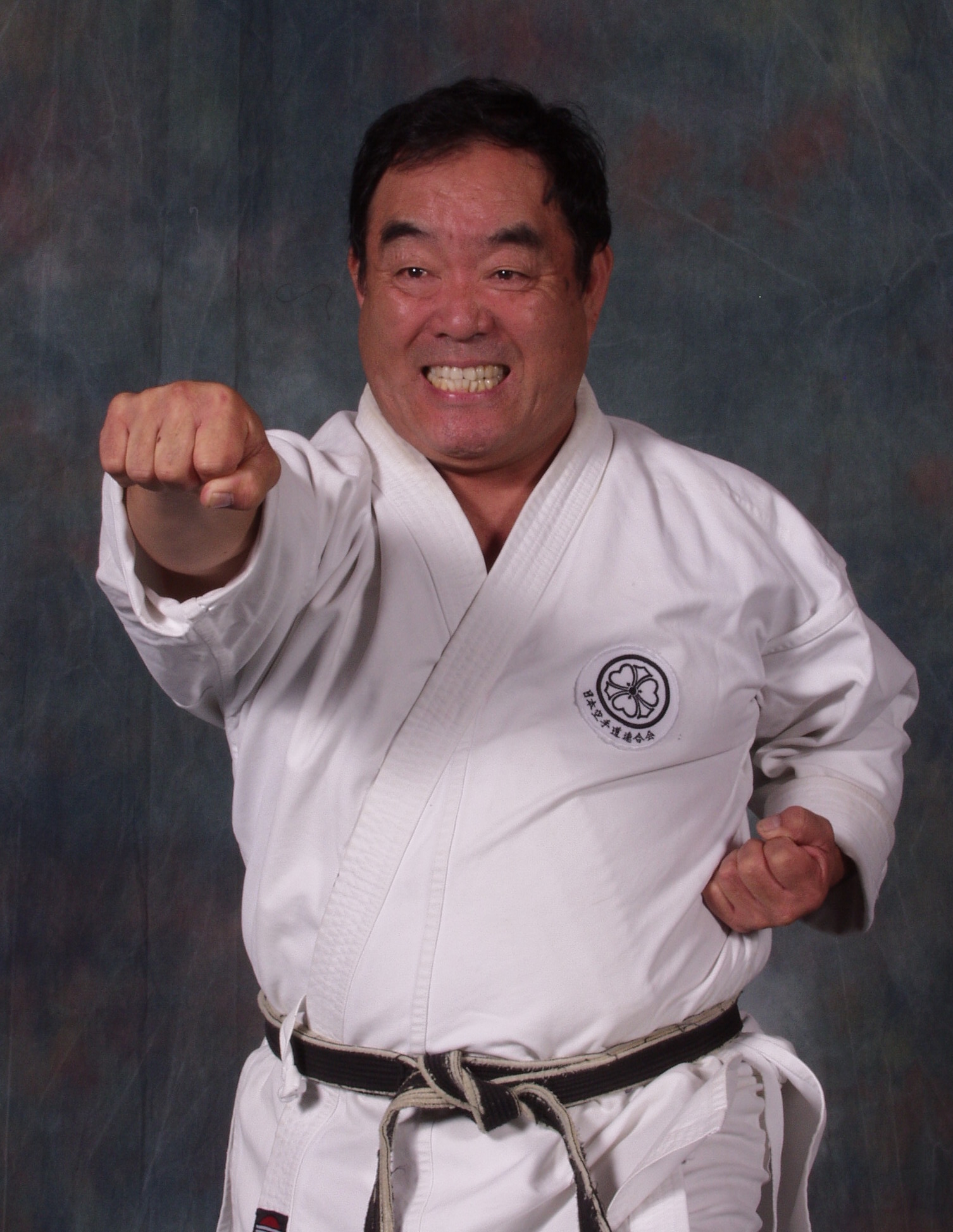
The All-Japan Karate Champion in 1961, Demura came to United States in 1965 to share his knowledge and spread his teachings in his own unique exuberant way. In so doing, he managed the difficult task of preserving the old values passed to him by his Japanese master, without compromising his traditional beliefs. Living in Southern California since his arrival, Demura was a close friend of martial arts legend Donn F. Draeger, who also knew acclaimed authority Dan Ivan, the man who brought Demura from Japan in mid-60s. Simply said, Fumio Demura is the type of person that people naturally follow as a leader.
Q: When did you decide to come to the United States?
A: The final decision was in 1965, but in 1963 I was helping Sensei Sakagami with a lot of demonstrations and I met Donn F. Draeger. Mr. Draeger was assisting his jiu-jitsu teacher, Takaji Shimizu, and I was helping Sensei Sakagami. I had no idea that meeting Donn would change the course of my life. We became good friends and he later introduced me to Dan Ivan. I remember that when I arrived in the States, I had to fight a great battle against frustration because of my poor English. I recall crying in bed for more than two days because I couldn’t communicate. It was very difficult for me to adapt to a new culture and language. But Ed Parker gave a great opportunity to demonstrate my art publicly at the 1965 Long Beach International Karate Championships, and that boosted my confidence and self-image.
Q: Who was your first connection in California?
A: Dan Ivan. He used to travel to Japan a lot and we became friends. He brought me over and later on offered me a partnership that lasted for a long time – not only in martial arts but in other different businesses such as real state. I would say that Mr. Ivan, along with Mr. Parker and Mr. Curtis Wong, helped me very, very much.
Q: Did you ever meet Bruce Lee?
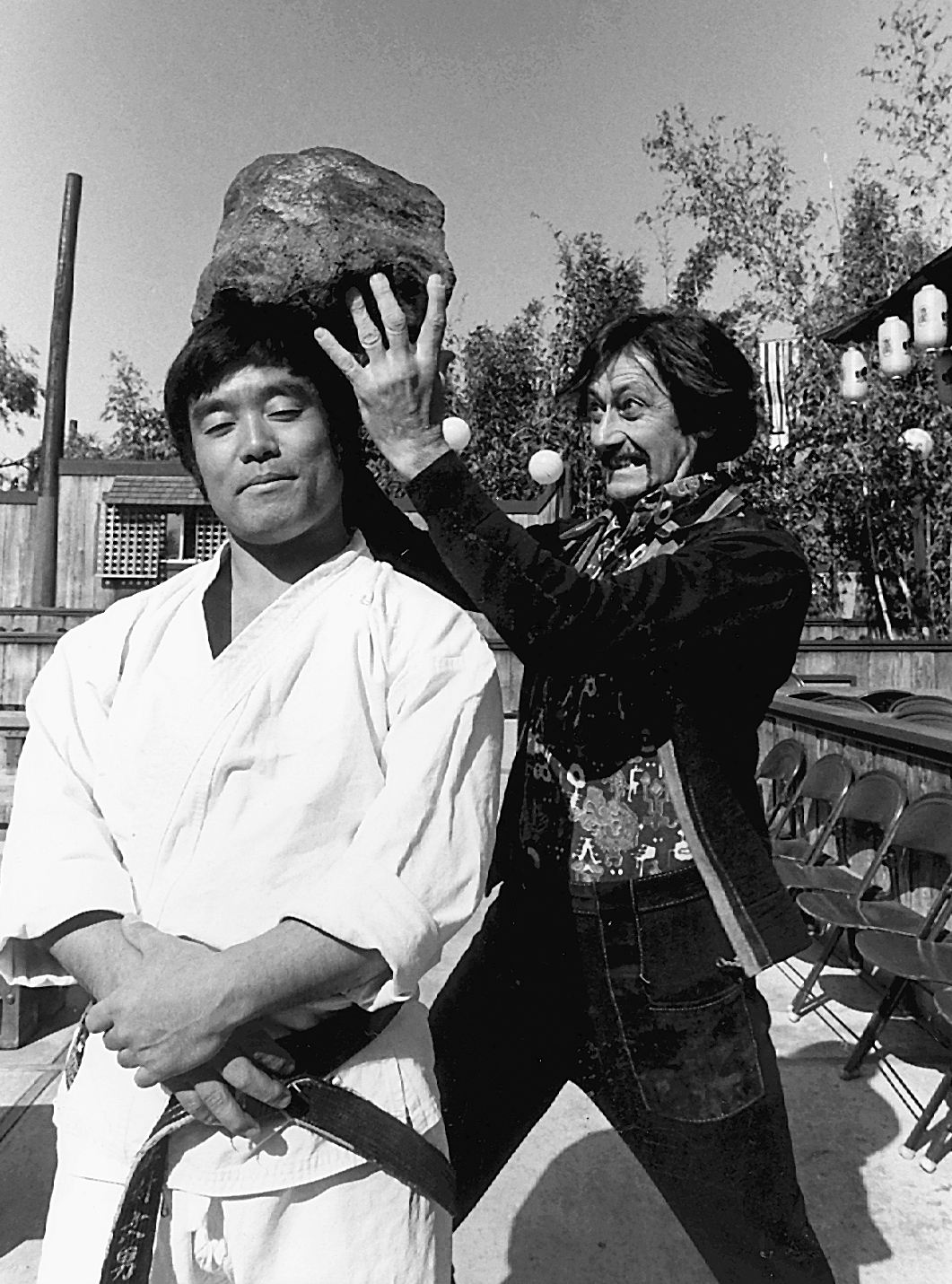
A: Yes. He was very nice to me. Bruce had a very strong sense for everything related to martial arts. He always wanted to learn more and was never satisfied with what he had. I remember that after my book on nunchaku came out, he would call me up with questions about the weapon, which he was studying at that time.
<
Q: Dan Ivan was a shotokan stylist and you are a shito ryu practitioner. How did you combine those two styles?
A: Well, out of respect for him I learned all the shotokan kata and taught them so the school would have the same curriculum. Once we separated our schools, I went back to teaching strictly traditional shito ryu and kobudo. I don’t recommend mixing styles. I tried to do it with shotokan and shito ryu and it was impossible – it just didn’t work. If you really understand both styles' principles, they don’t mix. There are a lot of reasons why many of today’s modern innovators are going back to the traditional systems.
Q: You were one of the first to use music to display traditional karate in a modern way. Were you criticized by your peers in Japan?
A: Very much. Even my own instructor criticized me for using music and giving demonstrations in a park. I was really upset. I kept asking myself if I was doing something wrong. Then my mother, Masu, whom I consider to be the greatest inspiration in my life, came to the United States and saw me perform. That gave me a lot of power and strength. She basically said that everyone was jealous because of my new position. She told me that people were paying for watching the demonstrations and that I had to give them a great show. The final turning point was at the WUKO World Championships in Long Beach, California in 1975. I gave a great demonstration in front of all the great masters from Japan, including the President of the WUKO, Mr. Sasakawa. I received a standing ovation, the biggest of the whole tournament. I guess that day they understood that I was not prostituting the art but drawing more attention to it. That’s why I didn’t understand the initial criticism at all. I really like the feeling of history and respect that the traditional approach provides.
Q: What are shito ryu’s strong points?
A: The founder, Kenwa Mabuni, studied under two major teachers, Yasutsune Itosu (Shuri te) and Kanryo Higaonna (Naha te). He combined the soft and circular approach of Naha with the hard and more linear techniques from the Shuri system. He also added part of tomari te, creating a very versatile karate method. You see, style does not matter; it’s the instruction that counts.
Q: Would you recommend the multi-style training approach?
A: No, not for beginners since this can be very confusing. At an advanced level I think it is very positive to learn something from other arts; the more you know about something, the more you can appreciate it. It doesn’t mean that you have to like everything but at least understand it and have some respect for it.
Q: Do you think traditional kata has to be changed to adapt to modern times?
A: Kata should not change at all. It is the traditional part of karate. Karate is an art. In the past it was used for combat and fighting. Perhaps a master altered part of the kata for certain reasons, according to his practical combat experience. To me, though, the kata has to be kept intact in modern times. Training methods and sparring techniques may change, but not kata.
END OF PART 2.
To learn more about Sensei Fumio Demura´s Kobudo and Karate:
http://martialartsdigital.com/fumio-demura-kobudo-...