 Loading... Please wait...
- Call us on Phone 213.936.5599
- Gift Certificates
- Wish Lists
- My Account
- 0.00

Categories
Articles - tonfa
KOBUDO – TONFA Part 2
Posted by Fumio Demura on Dec 16th 2016
KOBUDO – TONFA
Part 2
By Fumio Demura
Two of the most popular materials for tonfa manufacturing are oak and cherry wood. Many people like their tonfa varnished for better look, but if you are using it for practical combat techniques and training, this varnish soon will go away. No matter what, remember to clean it periodically with a cloth moistened with olive or other vegetable oil.The tonfa is composed of seven parts:
- Front head.
- Grip.
- Grip head.
- Top of main body.
- Bottom of main body.
- Side of main body.
- Back head.
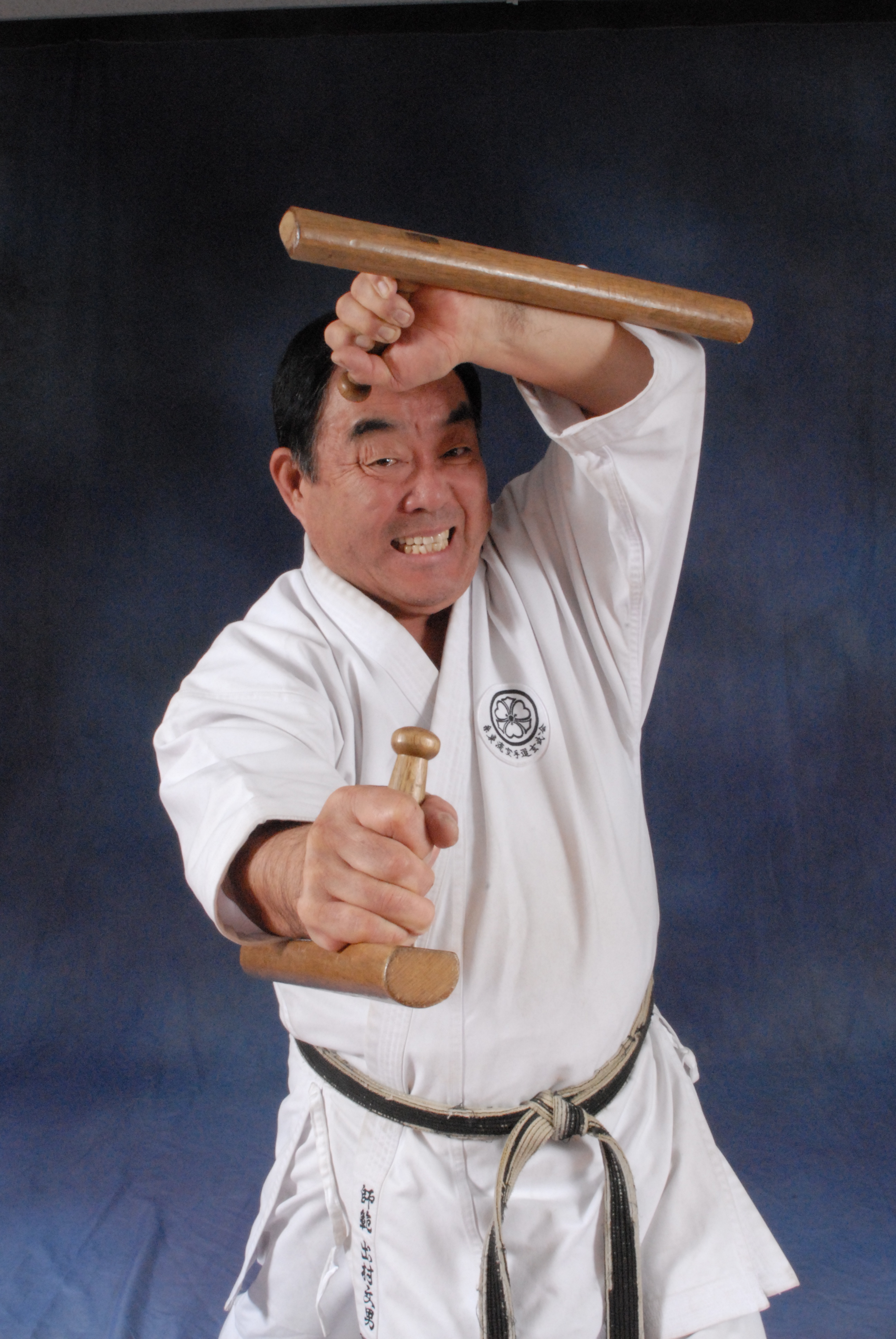 The basic grip of the tonfa is very similar to the Karate
fist and is firm enough so the weapon doesn’t drop while in use. Due to the
twisting and snapping actions, the grip has to be very relaxed but firm enough
to apply power at the moment of impact by squeezing and tightening up the
fingers. This is the reason why, in order to be effective using this weapon,
the practitioner must develop strong wrists. The key for a powerful swing of
the tonfa is to minimally bend the elbow when you are swinging the weapon.
Always keep the arms extended when rotating the tonfa.
The basic grip of the tonfa is very similar to the Karate
fist and is firm enough so the weapon doesn’t drop while in use. Due to the
twisting and snapping actions, the grip has to be very relaxed but firm enough
to apply power at the moment of impact by squeezing and tightening up the
fingers. This is the reason why, in order to be effective using this weapon,
the practitioner must develop strong wrists. The key for a powerful swing of
the tonfa is to minimally bend the elbow when you are swinging the weapon.
Always keep the arms extended when rotating the tonfa.
The blocking actions resemble those used in Karate and the principles are almost identical. The attacking maneuvers are varied and they can be more complex when we use two tonfa at the same time. Always remember that an effective performance and use of the tonfa involves three different principles: maai, kime, and mushin, and perfect synchronized action of the hands, elbows, and hips.
To learn more about Kobudo and Fumio Demura:
http://martialartsdigital.com/fumio-demura-kobudo-...
KOBUDO: The Art of Bo
FUMIO DEMURA KOBUDOThe Art of BoThe real origin of the Bo, kon, or straight staff is sill obscure in the Kobudo history. The Okinawans had to rely on farming instruments to protect themselves since the inhabitants of the island were barred from owning any sort of weapons, and it is believed that this weapon was developed from the tenbin, [...]