 Loading... Please wait...
- Call us on Phone 213.936.5599
- Gift Certificates
- Wish Lists
- My Account
- 0.00

Categories
Articles - bo
KOBUDO: The Art of Bo
Posted by Fumio Demura on Nov 29th 2016
FUMIO DEMURA KOBUDO
The Art of Bo
The real origin of the Bo, kon, or straight staff is sill obscure in the Kobudo history. The Okinawans had to rely on farming instruments to protect themselves since the inhabitants of the island were barred from owning any sort of weapons, and it is believed that this weapon was developed from the tenbin, a staff held across the shoulder that was used to carry buckets hanging from each end with water or food. When attacked, the farmer would drops these and use the staff for self-protection.The size and dimensions of the Bo will vary depending on the practitioner but the regular Bo is about six feet long or as described in Japanese roku shaku-bo. There also are other lengths and shapes for the Bo, like the four-foot (yon shaku-bo) and the nine-foot (kyu shaku-bo). As far as the shape is concerned, some traditional teachers still use the square and hexagonal shape because these multiple edges provide a more destructive effect. Some of the most common circularly shaped types of Bo are:
- Maru-bo (round)
- Kaku-bo (four-sided)
- Rokkaku-bo (eight-sided) and,
- Take-bo (bamboo).
The thickness also varies due to personal preferences, but it typically measures 1¼-inch thick at the center ( Chukon-bu) and around 3/4-inch at the end (Kontei). This difference in thickness facilitates strong and powerful whipping actions and guarantees that the Bo’s fulcrum stays at its center as rigidity is simultaneously reduced, which helps easy handling.
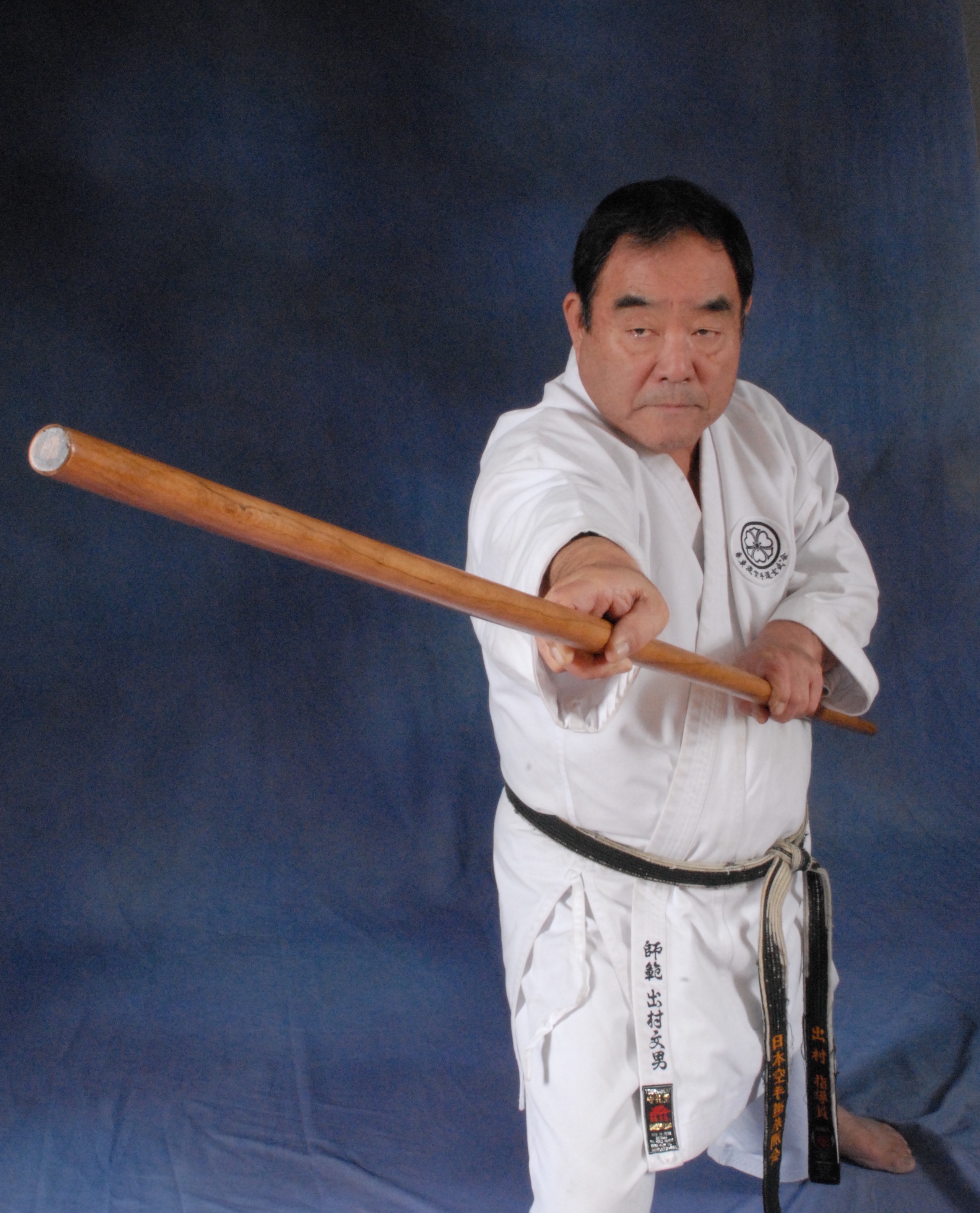
To determine if the Bo possesses the correct shape and handling qualities, we can simply roll it across a flat surface; if it is properly constructed, it will roll smoothly. If it is bent or warped, the weapon will roll unevenly, making a loud clatter. Modern Bo manufacturers use strong wood like red or white oak to produce the weapon. These have replaced the old bamboo and increased the sturdiness of the weapon.There are four basic holds when practicing with the Bo. You should develop a familiarity with all of them so you can switch holds at will and at high speed when performing kata and sparring combinations. Almost all Bo-jutsu actions [both single and complex] are executed by grabbing the weapon with the basics grips. These are:
- Jun Nigiri (Basic Hold)
- Gyaku Nigiri (Reverse Hold)
- Hasami Nigiri (Palm Hold)
- Yose Nigiri (Double Hold)
Remember, no matter how proficient you may be using the Bo, your technique will never be perfect because perfection is something unattainable in the Martial Arts. It is a goal we all must strive for but that we’ll never achieve.
To learn more about Kobudo and Sensei Fumio Demura weaponry art:
http://martialartsdigital.com/fumio-demura-kobudo-6-dvd-set-special-offer/