Loading... Please wait...
- Call us on Phone 213.936.5599
- Gift Certificates
- Wish Lists
- My Account
- 0.00

Categories
Articles - fumio demura
FUMIO DEMURA Leading by Example
Posted by Jose M. Fraguas on Dec 1st 2016
FUMIO DEMURA
LEADING BY EXAMPLE
Part 1
by Jose M. Fraguas
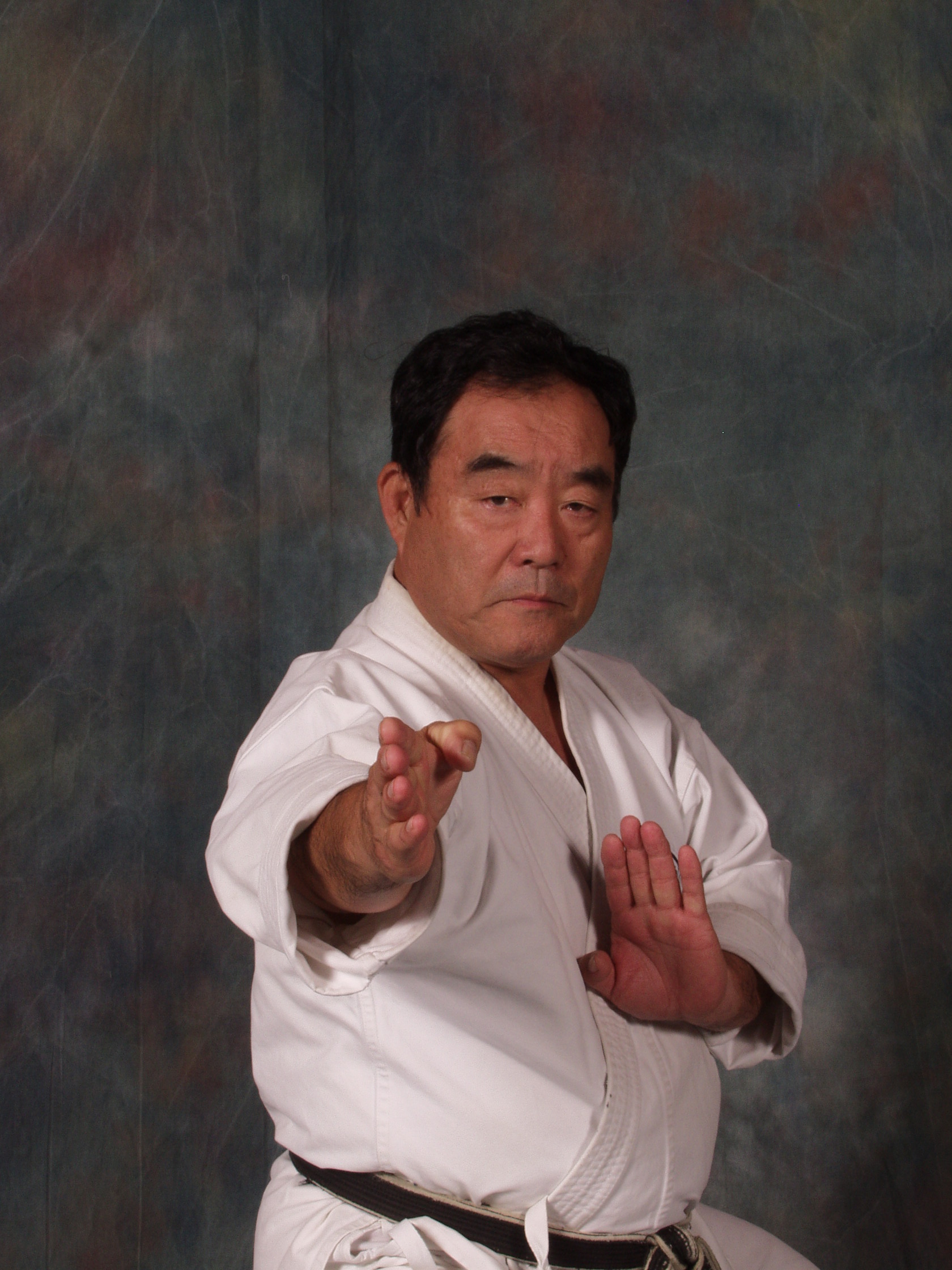
Although Fumio Demura has been a martial arts superstar for more than four decades, he has managed to keep traditional karate values in his life, and loyalty and respect in his personal and professional relationships.He is a superb technician, a great martial artist, and one of the finest performers and weapons experts in the world. He is credited with being the first professional karate performer to incorporate lights, music, costumes, and martial arts into the same routine. His technical prowess is breathtaking – as is the trademark precision of his punches and kicks. Easy-going and affable, he is one of the most accessible karate masters to learn from. Author of several books on karate and kobudo, Sensei Demura is known worldwide for his movie work in films as The Karate Kid, Rising Sun, and The Island of Dr. Moreau. This is the first of a three-part inteview.
Q: What’s your rank in karate-do?
A: Rank is something I really don’t care about, but because you asked I hold a 7th Dan in shito ryu itosu kai karate-do. I still consider myself a 5th degree, though, like most traditionalists. I was a 5th degree for over 25 years until my teacher told me that my own students were going to outrank me, and then gave me the 7th degree black belt.
Q: Why don’t you dwell on rank?
A: Basically, because I consider myself a Master Ryusho Sakagami student. I don’t look at myself as a master at all. Today everybody wants recognition; everybody wants to be called “master.” They say, "They don’t give credit to me.” I really feel embarrassed by all this for the sake of karate.
Q: What did Sensei Sakagami mean to you?
A: Everything. Master Sakagami had a big influence on my life and was like a second father to me. While he didn’t physically train me so much, I learned a lot from him in other ways. Sincerely, I would say that he “created” me in many different ways. I really liked his personality and his way of doing things.
Q: Did you study other arts?
A: Yes, I did. But because of my attitude towards rank, I never tested for belts in them.
Q: When did you start training in karate?
A: It was a long time ago! I started training because of illness. As a child I got a severe infection in my tonsils which left me very weak. The doctor said I should exercise. When I was 8 years old I started taking kendo lessons under Sensei Asano. When he had to move away, he gave me a letter of recommendation for Ryusho Sakagami to begin karate training. But in fact I didn’t take it seriously until I was around 12. I also studied aikido, kyudo, and judo during my high school days. I went to high school to study drama because I wanted to be an actor. But once I finished school, my father disapproved so I had to go to the university to study economics because that’s what my father wanted.
Q: How did you come to study kobudo?
A: Thanks to Sensei Sakagami, I was able to receive my training from Kenshin Taira, a kongou ryu kobudo master who died in 1973. Master Sakagami invited him to become a teacher in our dojo and he accepted the position and came to live in Master Sakagami’s house. Master Taira influenced a lot of people because he was moving around all the time in order to teach. Due to his age, Sensei Taira was a little hard to communicate with – but his skill and teaching abilities were fantastic. He was a typical “old style” sensei and taught just one way, which never ever changed. He was very, very special. Master Sakagami was also a kendo and iaido teacher. I took iaido and kendo classes from him, but I also trained kendo under Sensei Taisaburo Nakamura.
Q: Were you outgoing as a child?
A: My personality was very different from now. I was born in Yokohama and I had four brothers and two sisters. I was very bashful and it was almost impossible for me to go in front of people. From the physical point of view I was very weak, I had a problem with my tonsils. Fortunately, martial arts changed all that!
Q: How was the training during the old days?
A: Very difficult! The training was harder and very demanding. We used to train the basics everyday for hours. Just basics!
Q: It is true that you failed your first test for white belt?
A: Yes, I did! In fact, that made me realize a lot of things. That embarrassed me so much that I decided to set goals and put more time into training. Since them, I have always believed that failures can make you grow and improve if you know how to make a stepping-stone out of them.
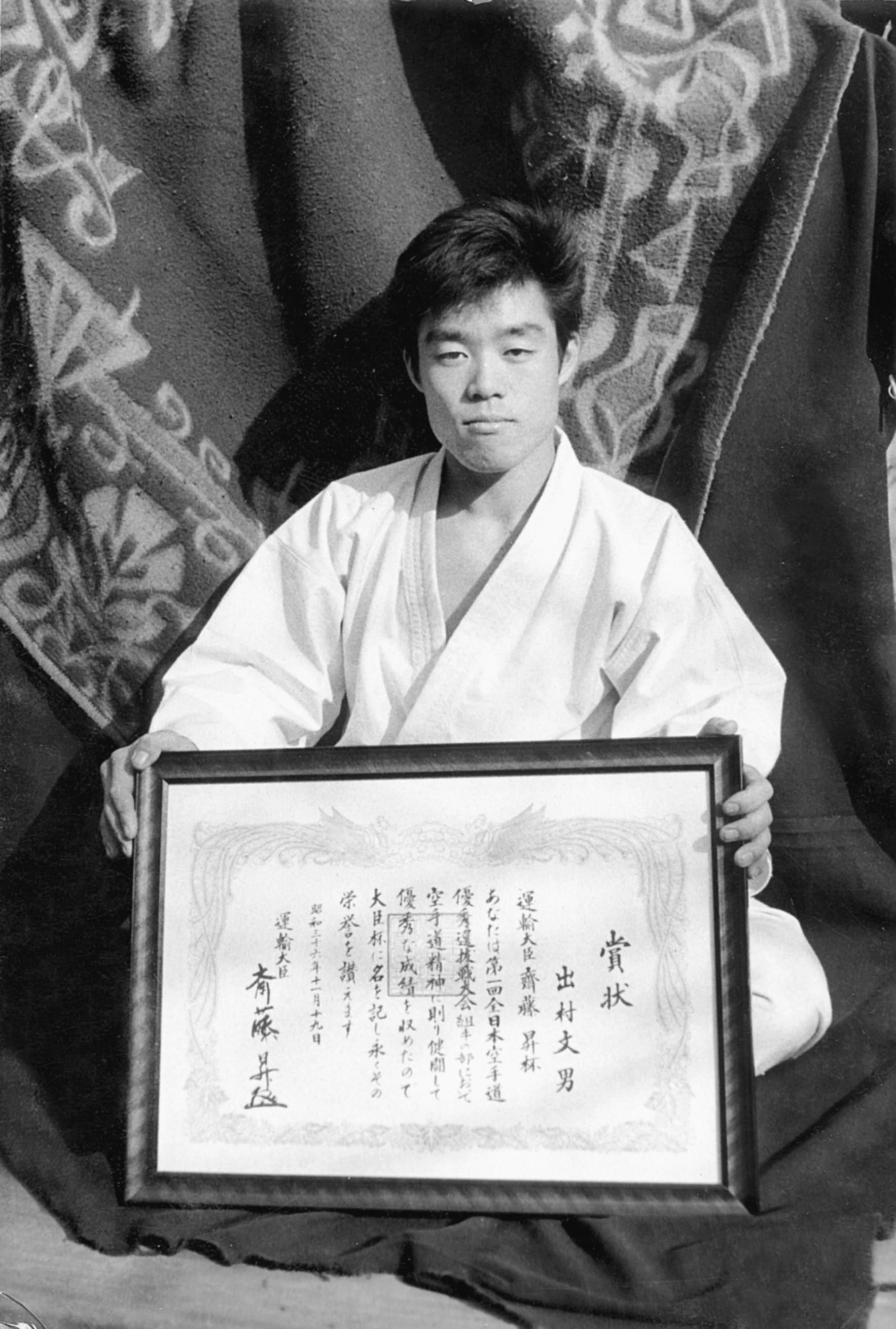
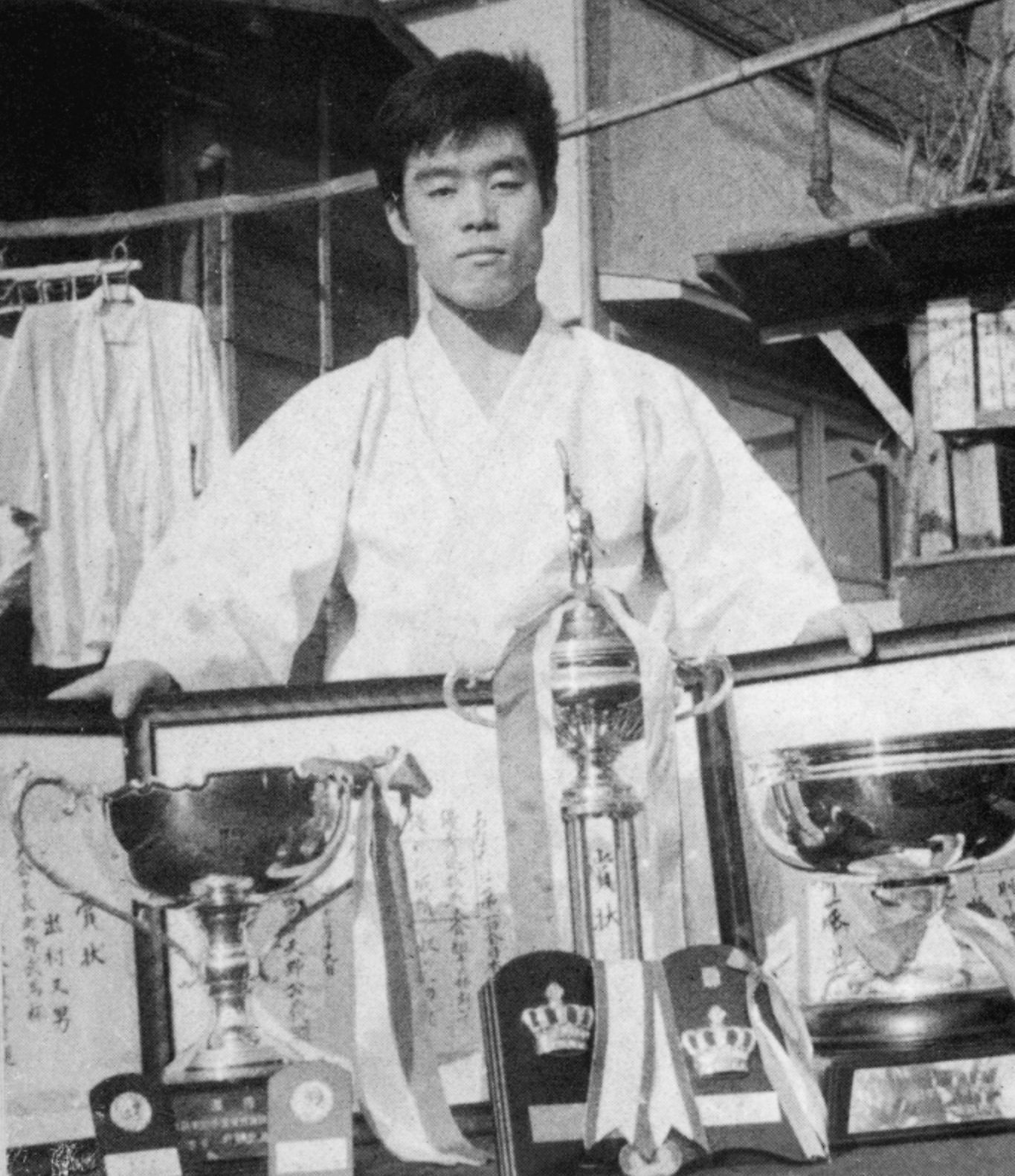
Q: How hard was it to win the All Japan Karate Championship in 1961?
A: That tournament was very hard because every style, association, and school was there – goju ryu, shotokan, shito ryu, wado ryu, and more. It was very difficult to win because the best fighters in Japan were competing in it. I was very nervous. I had fought in other small tournaments but never in a big one like that.
End of Part 1.
To learn more about Sensei Fumio Demura´s Karate-do:
http://martialartsdigital.com/fumio-demura-5-dvd-s...